
Together Loans
Transform Credit IncFinance
4.3272.00 Reviews
- Version
- 9.1.2
- Installs
- 100.00K
- Age Rating
- Everyone
Screenshots
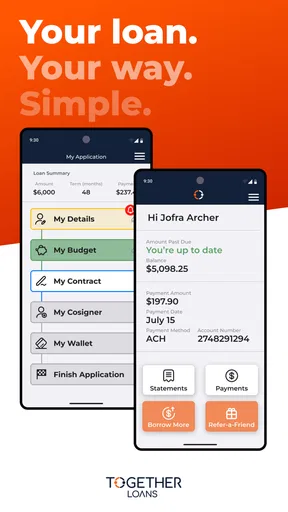
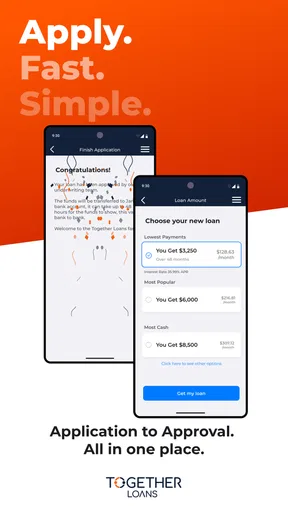
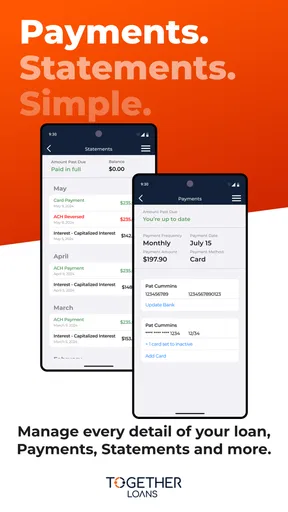

Our Review of Together Loans
 Analysis by Appyee
When I opened Together Loans, I immediately understood its purpose: this is a focused finance app for people who already have a loan with Transform Credit Inc and want a simpler way to manage it from a phone. It is not trying to be a general banking replacement, a budgeting suite, or a marketplace for comparing every borrowing option. That narrow purpose is also its main strength.
In my experience, a loan-management app earns its place when it reduces small sources of stress: checking what is happening with an account, staying aware of repayment responsibilities, and avoiding the need to search through old messages or paperwork. Together Loans is built around that kind of routine. The app is free to download, rated for Everyone, and available for devices running Android 7.0 or later, so the basic entry barrier is low for many users.
My recommendation depends on one important question: are you trying to manage an existing Together loan, or are you still deciding which borrowing service to use? For the first situation, the app makes sense. For the second, it is not the right tool because its value comes from managing a relationship that is already in place rather than helping you shop around.
What I looked for before recommending it
I judged Together Loans less like a conventional finance hub and more like a dedicated account companion. That distinction matters. With a broad banking app, I expect spending analysis, transfers, savings tools, card controls, and perhaps support for several financial products. With a loan-management app, I care more about whether the central account is easy to reach, whether the information is presented clearly, and whether the app helps me keep repayment tasks visible.
I also considered how much work is involved before the app becomes useful. A focused app should not make me rebuild my financial life inside it. If I only need to check or manage one loan, a smaller interface can be preferable to a crowded dashboard. The trade-off is that I should not expect the wider financial picture that a bank app or budgeting service may provide.
The developer is Transform Credit Inc, and the app has built a modest but meaningful user base, with over one hundred thousand installs. Its average rating is 4.3 from around six hundred ratings, while the review count is around three hundred. I would not treat those figures as a guarantee of a perfect experience, but they do suggest that the app has been useful to a substantial group of borrowers.
The current release is version 9.1.2. I mention that because finance apps need to be maintained carefully: account access and personal information deserve a product that continues to receive attention. Still, the version number alone does not tell me how every device or account will behave, so I would keep the app updated and use the official support route if something around a loan account looks inconsistent.
The everyday situation where it is most useful
Imagine that I am away from home and suddenly want to check my loan before planning the rest of the month. I do not want to open a laptop, find a document, or search an inbox for an old message. A dedicated loan app gives me a more direct place to start. I can make checking the account part of a regular money routine rather than treating it as an occasional paperwork task.
That is the practical appeal here. The app is not necessarily exciting, and that is a compliment in this category. A borrowing account should feel predictable. I would use it before a payday budget review, after an unexpected expense, or whenever I need to confirm that I am looking at the right loan information before making a decision about other spending.
One useful habit is to separate checking from reacting. I would open the account, review the information available, and then compare it with my personal budget before deciding what I can afford elsewhere. The app can be a convenient window into the loan, but it should not replace a complete household budget. That distinction helps prevent the common mistake of seeing an account screen and assuming the rest of the month is automatically manageable.
Where the focused design has an advantage
The strongest reason to choose Together Loans is concentration. A loan account is easier to find when it is not buried beside cards, savings goals, investment charts, and promotional panels. For someone who wants one place dedicated to an existing loan, that focus may be more helpful than a larger financial app with many unrelated tools.
I also like the idea of using the app as a record-checking step. Before contacting support, I can first review the account myself and make sure I understand what I am asking about. That can make a conversation more efficient, especially when the question concerns a specific account detail rather than general borrowing advice.
Another non-obvious benefit is that a dedicated app can create a cleaner boundary between loan management and everyday spending. If I use my main banking app for groceries, bills, and transfers, keeping the loan in its own application may make it easier to give repayment obligations deliberate attention. It is not a full financial plan, but the separation can help me avoid losing a serious commitment inside a busy transaction feed.
For users who are not comfortable with complicated financial software, the limited scope may also feel less intimidating. There are fewer reasons to explore screens that have nothing to do with the loan. I would still read every account detail carefully, but I would not be learning an entire financial platform just to reach one borrowing account.
What I would check before relying on it
A loan app is only as useful as the account access it provides to a particular borrower. Before making it part of my routine, I would complete the sign-in process, confirm that the correct account appears, and look for the information I actually need. I would not assume that installing the app alone changes a repayment arrangement or replaces any formal communication connected with the loan.
I would also keep an independent record of important dates and commitments. This is not because the app is unsuitable, but because responsible borrowing should not depend on one screen or one device. A calendar reminder and a simple budget note can work alongside the app. That two-step approach is especially sensible if I change phones, lose access temporarily, or need to discuss the loan with someone else.
Security habits matter just as much as convenience. I would use a strong device passcode, avoid sharing login details, and be cautious when opening financial information on a public network. These are everyday precautions, but they become more important when an app connects me to a credit account. I would also check that I am using the genuine application associated with Transform Credit Inc before entering personal details.
The age rating of Everyone makes the app broadly accessible from a store-rating perspective, but that should not be confused with borrowing advice for every person. A finance app can be suitable for general audiences while the loan itself remains a serious adult financial commitment. I would judge the borrowing decision separately from the convenience of the software.
How it compares with the usual alternatives
The closest alternative is often the lender’s website viewed in a mobile browser. That option may be enough for someone who checks an account only occasionally and does not want another app installed. A browser can also be preferable when I am using a shared or temporary device. The disadvantage is that the experience may feel less direct, and I may have to navigate through a website each time instead of opening a dedicated loan-management tool.
A general banking app is another common substitute. It can be better when I want my loan considered alongside income, bills, card spending, and savings. Seeing the wider picture is valuable when the main question is, “Can my budget handle this?” Together Loans may be the better companion when the question is narrower: “How do I keep track of this particular loan?”
Budgeting applications serve a different purpose again. They can help me plan categories, monitor spending patterns, or prepare for upcoming obligations. I would choose one of those if my main difficulty is controlling monthly spending rather than accessing loan information. Together Loans should complement that kind of tool, not be expected to replace it.
Finally, a lender’s customer-support channel may be better for unusual cases, account corrections, or questions that require a formal answer. An app is convenient for routine access, but convenience does not mean every issue can be solved inside the interface. If something appears wrong, I would save the relevant details, avoid guessing, and contact the appropriate support team rather than repeatedly trying the same action.
This comparison leads to a simple trade-off. Together Loans can reduce friction for an existing borrower, while broader alternatives offer more context or more flexibility. Neither approach is universally superior. The right choice depends on whether I value a dedicated loan window or a complete view of my finances.
The real cost of changing how you manage the loan
Switching to the app itself is relatively straightforward in concept because it is free to download. The larger cost is not money; it is attention. I need to sign in, confirm that the account information is correct, establish a habit of checking it, and decide which reminders or personal records I will keep outside the app.
If I am moving from a browser, I may gain faster access but lose the convenience of using a familiar web workflow. If I am moving from a general banking app, I may gain focus but lose the ability to see the loan beside other accounts. Before switching, I would write down the two or three things I currently check most often and verify that the new routine supports them.
I would not delete old records immediately. Keeping previous statements, messages, or personal notes until I am comfortable with the new process is sensible. The app can become the convenient day-to-day window while those records remain useful for reference. This is particularly helpful during the first few weeks, when I am still learning where information appears and how often I need to check it.
There is also a behavioral cost to adding another finance app. Every extra notification, login, or account screen can become background noise. I would use Together Loans deliberately, not compulsively. A planned review—such as checking the account during my monthly budget session—could be more useful than opening it repeatedly without a clear purpose.
Because the app supports Android 7.0 and later, compatibility should cover a wide range of Android phones, including some older devices. Even so, I would consider the condition of my phone and the reliability of its operating system before depending on it as my only access method. Keeping an alternative way to reach the lender is a practical backup, not a criticism of the app.
Who should use it and who should skip it
I would recommend Together Loans to an existing Together borrower who wants a direct, phone-based way to manage the loan. It is especially suitable for someone who dislikes searching through email, prefers a dedicated finance tool, or wants to make account checking part of a regular routine.
It may also suit a person who already uses a separate budgeting method. In that setup, the app handles the loan account while a spreadsheet, banking app, or budgeting tool handles the wider household plan. That division of labor is more realistic than expecting one focused app to do everything.
I would be less enthusiastic for someone who is comparing lenders, looking for broad financial education, or trying to organize several unrelated accounts in one place. A general banking or budgeting solution may be a better starting point for those needs. I would also avoid treating this app as a substitute for reading loan terms or asking questions about affordability. The clean interface of an account tool should never make borrowing feel casual.
People who rarely use mobile apps may prefer the browser or support route they already understand. Installing a dedicated application is worthwhile only if it makes access easier, not if it adds another task. Likewise, anyone who needs a detailed spending analysis will probably need a separate tool, because loan management and financial planning are different jobs.
My final recommendation
After using Together Loans as a focused finance companion, I see it as a practical choice rather than an all-purpose money app. Its value is clearest when I already have the relevant loan and want a straightforward place to manage that relationship from an Android device. The free price and Everyone content rating make trying it simple, while the established install base and 4.3 average provide some reassurance that it is not an obscure experiment.
My strongest advice is to decide based on the task, not the category label. If the task is keeping an existing Together loan within easy reach, I would try it and build a calm checking routine around it. If the task is comparing borrowing options, planning a complete budget, or combining multiple financial products, I would look toward a browser, banking app, budgeting tool, or direct support channel instead.
Together Loans works best as a dedicated account companion, not as a complete financial command center. That limitation is important, but it is also what makes the app understandable. I would recommend it to the right borrower, keep independent reminders and records, and use a broader financial tool alongside it whenever I need a view of the whole household rather than one loan.
Verdict
Strengths of Together Loans
- Simple application process with clear loan details and repayment terms.
- Convenient access to loan information from a mobile device.
- May help users compare available borrowing options in one place.
- Digital document submission can reduce paperwork and branch visits.
- Useful repayment tracking features may help organize monthly finances.
Limitations of Together Loans
- Loan approval, rates, and terms may depend on individual eligibility.
- Borrowing costs can be high compared with traditional financing options.
- Some features may require sharing sensitive financial and personal information.
- Late payments could lead to fees and negatively affect your credit history.
- Availability and loan products may vary by location and lender.
Similar Picks in This Category
View All
Google Wallet
Google LLC4.3

Airtel: Recharge, Bank & Loans
Airtel4.0

PayPal - Pay, Send, Save
PayPal Mobile4.2

DANA Indonesia Digital Wallet
PT Espay Debit Indonesia Koe4.5

Binance: Buy Bitcoin & Crypto
Binance Inc.4.8

Cash App
Block, Inc.4.7
Frequently Asked Questions
What is Together Loans, and how does the app work?
Together Loans is a digital loan service designed to help users explore borrowing options and submit an application online. The app or website may collect personal, financial, and identity information to assess eligibility and present available offers. Loan approval, interest rates, repayment periods, and fees depend on the applicant’s circumstances and the lender’s criteria, so review every offer carefully before accepting.
Who can apply for a loan through Together Loans?
Eligibility requirements can vary depending on the lender and the type of loan requested. Applicants will generally need to meet minimum age and residency conditions, provide valid identification, and have a reliable source of income or other financial information. Submitting an application does not guarantee approval, and Together Loans may use credit checks or additional verification before displaying or confirming an offer.
Does applying through Together Loans affect my credit score?
The effect on your credit score depends on the application process and the lenders involved. An initial eligibility check may use a soft credit search, which typically does not affect your score, while a full application or acceptance may involve a hard search. Before continuing, read the service’s privacy and credit-check disclosures so you understand what information may be shared and when.
Are Together Loans safe to use, and what information is required?
As with any financial application, users should confirm that they are using the official Together Loans platform and that the connection is secure before entering sensitive information. The service may request details such as your name, address, income, employment, bank information, and identification documents. Never share passwords or security codes, and carefully review the privacy policy, lender details, fees, and authorizations.
What costs and repayment terms should I check before accepting a loan?
Do not judge a loan only by the advertised interest rate or monthly payment. Check the annual percentage rate, total amount repayable, arrangement or administration fees, late-payment charges, repayment frequency, loan duration, and any early-repayment conditions. Make sure the payments fit comfortably within your budget, because missed payments may lead to additional costs, collection activity, or damage to your credit history.
